
The Economics of Heritage
What a 113-Year-Old Fire Station Reveals About Capital Allocation

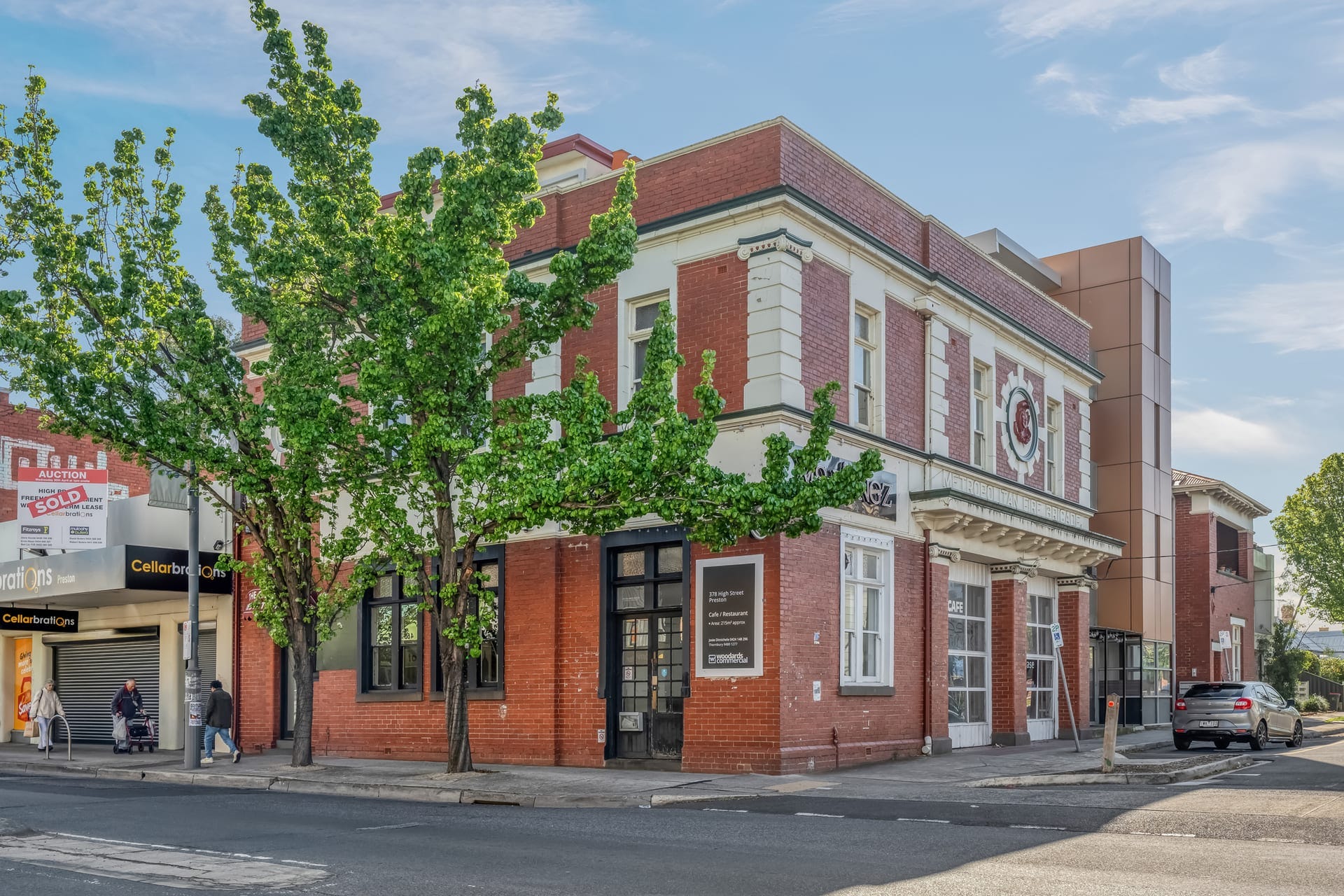
I’ve just completed a capital strategy for a heritage-listed former fire station in Preston, Melbourne (Australia). Cedric Ballantyne’s 1912 civic architecture, now adaptively reused as café and office space. Listed at $3.1 million (AUD) across two titles.
The numbers tell a story that extends well beyond this single asset.
The 10-Year Capital Reality
Total 10-year capital requirement: $1.69 million. Against a $3.1 million purchase price, that’s a 54% capital overlay just to maintain and operate. Break it down by timing:
Short-term (Year 1): $142,300, predominantly compliance verification and investigation
Medium-term (Years 2-5): $711,000, facade preservation, heritage painting, window restoration
Long-term (Years 6-10): $832,000, lifecycle replacement of services and finishes
What strikes me: a significant portion of Year 1 spend addresses investigation rather than remediation. Foundation assessment. Roof survey. Structural timber condition. Fire compliance verification. Before you can confidently deploy capital, you need to know what you’re dealing with. The LOW confidence items alone, representing genuine unknowns requiring investigation, total $46,500.
The Heritage Premium
Heritage compliance elevates costs approximately 25-35% above comparable non-heritage stock. Lime mortar specifications. Heritage Victoria approval pathways. Restricted access methodology. Specialized materials. The building envelope alone (facade repointing, heritage painting, timber window restoration) accounts for $633,000 over the decade.
This isn’t a criticism. It’s the cost structure of authenticity. The question for allocators is whether the premium is priced into acquisition, or whether it represents hidden exposure.
The Information Gap Pattern
What’s notable in this assessment is how much remains unknown despite the building’s prominent listing. Foundation type and capacity: unverified. Roof structural timber condition: concealed. Fire compliance certification status: unclear. 113 years of progressive modification without comprehensive documentation creates systematic uncertainty.
This isn’t unusual for heritage assets. It’s typical. The methodology matters here. Provisional allowances with explicit worst-case scenario budgets ($180k-$280k foundation risk, $185k-$245k roof replacement risk) rather than false precision masking genuine uncertainty.
The Investment Thesis
The capital strategy endorses this asset conditionally. Strong fundamentals: prominent corner location, successful adaptive reuse, dual-title flexibility, heritage significance. But prerequisites before confident deployment: complete the investigation program, secure heritage pre-approval pathways, verify tenant lease terms.
The building generates $43,264 p.a. from the office tenancy. Against $1.69 million in 10-year capital requirement, income alone doesn’t carry the investment. The thesis depends on either development upside (the listing highlights “airspace potential for rooftop activation”) or capital appreciation in Preston’s civic precinct.
What This Suggests for Heritage Allocators
Heritage assets trade on architectural significance and adaptive reuse potential. The physical reality underneath often includes deferred maintenance legacies, compliance verification gaps, and elevated lifecycle costs that aren’t visible in marketing materials.
The systematic approach here (investigation before deployment, provisional allowances for unknowns, explicit worst-case budgeting) represents the rigor required for informed allocation. Not every capital strategy does this. Many understate the complexity of 100-year-old buildings converted to modern commercial use.
If you’re active in heritage stock, what’s your experience with investigation programs before acquisition? I’m curious whether others are building this into their due diligence protocols or discovering the capital reality post-settlement.
Asset Type: Heritage Commercial Mixed-Use
Location: Preston, Victoria (Melbourne inner-north)
Key Signal: Heritage building lifecycle capital requirements averaging 54% of asset value over 10 years, with investigation and compliance verification representing significant Year 1 priority
Case study derived from Capital Strategy assessment, January 2026. Methodology: documentation-based assessment with provisional allowances for information gaps per our Built Asset Intelligence framework.